In medical and pharmaceutical manufacturing, automation is about more than speed. It is about maintaining control, consistency, and confidence in environments where product quality and contamination risk are closely tied to product integrity and process reliability.
When parts enter a cleanroom assembly or packaging environment, the feeding system becomes more than a piece of upstream equipment. It becomes part of how the line maintains cleanliness, stability, and repeatable performance. Every contact point, surface, and transfer matters because each one can influence product quality, contamination risk, and the need for operator intervention.
That is why cleanroom feeding automation requires a different approach than standard industrial parts feeding. The objective is not only to move parts efficiently, but to present them in a controlled, repeatable way that supports contamination-conscious manufacturing.
In medical and pharmaceutical applications, feeder systems need to do more than deliver reliable orientation. They also need to support contamination control, use suitable materials, handle parts gently, and be designed for effective cleaning.
Why Cleanroom Environments Demand a Different Parts Feeding Strategy
In a standard industrial environment, parts feeding is often measured by speed, uptime, and orientation reliability. In a cleanroom environment, those benchmarks still matter, but they are not enough on their own.
Medical and pharmaceutical manufacturing place higher demands on the entire feeding system. It is not only expected to move parts efficiently, but also to support contamination control, reduce particle generation, withstand repeated cleaning, and limit unnecessary operator intervention. In many cases, these environments are also governed by strict regulatory requirements, which means cleanliness, consistency, and process stability need to be built into the system from the start.
Medical and pharmaceutical components such as molded plastic parts, elastomeric pieces, caps, plungers, closures, diagnostic consumables, and small packaging components are often lightweight, static-prone, thin-walled, or difficult to control in bulk. Some are also sensitive to marking, abrasion, or deformation. As a result, the feeder system needs to do more than orient parts correctly. It needs to move them in a controlled, repeatable way that reduces friction, instability, and unnecessary contact throughout the process. In cleanroom environments, those characteristics require more careful feeder design because unstable part movement, excess contact, and material sensitivity can all make contamination control and consistent handling more difficult.
How Feeding System Design Supports Contamination Control
In cleanroom manufacturing, the feeder system does more than move parts to the next station. It also affects how cleanly, consistently, and efficiently the line operates. A feeder can perform well mechanically and still create problems in a cleanroom if it is difficult to clean, inspect, or maintain.
That has a direct impact on system design. Surface finishes, material choices, contact points, accessibility, and overall layout all matter more in cleanroom applications. For automated feeding systems, that usually means designing to:
- reduced part-to-part friction
- minimal wear at contact surfaces
- accessible tracks and contact areas
- minimal dust- or residue-trapping geometry
- sensible separation between product-contact and drive areas
- layouts that support cleaning without excessive disassembly
- integration that limits manual intervention in higher-risk zones
- consistent part presentation so downstream equipment does not require repeated adjustment or interruption
This is what separates medical cleanroom parts feeders from more general-purpose systems. The feeder is not only responsible for part presentation. It also plays an important role in supporting contamination control and process stability across the line.
Choosing the Right Materials for Cleanroom Feeding Systems
In cleanroom and sterile manufacturing, equipment needs to be appropriate for the process, easy to clean and maintain, and built with contact surfaces that help protect product quality. FDA guidance reinforces that broader expectation, including the principle that product-contact surfaces should not interfere with the “safety, identity, strength, quality, or purity” of the materials or products moving through the system.
For automated feeding systems, that has practical implications. Contact materials need to be selected not only for wear resistance, but also for cleanability, chemical compatibility, and how they interact with the part itself. In many applications, stainless steel feeder systems are a strong fit because they can provide smooth, corrosion-resistant surfaces that support routine cleaning and repeatable sanitation practices. In other areas of the system, engineered plastics, coatings, or other low-friction materials may be used where they help reduce sticking, scuffing, or unnecessary abrasion.
The right choice depends on the application as a whole. Part geometry, surface sensitivity, cleaning methods, and overall process requirements all need to be considered together. In cleanroom feeder design, the best material helps protect part integrity, supports contamination control, and delivers reliable long-term performance.
Surface Finish and Treatments for Better Cleanroom Performance
In cleanroom manufacturing, surface condition directly affects cleanability, particle control, and how well it supports contamination control overall. Surfaces that are difficult to clean or prone to wear can create unnecessary risk by allowing residue to collect, increasing particle generation, or making sanitation more difficult to perform consistently.
For feeder systems, that puts greater importance on how contact surfaces are designed and finished. Smooth, controlled surfaces can help parts move more predictably while reducing unnecessary friction. Minimizing rough areas, hard transitions, recessed features, and high-wear contact points can also help reduce debris buildup and support more effective routine cleaning.
Surface treatments can further improve performance when they are matched properly to the application. In some cases, they may help reduce sticking, scuffing, or abrasion. In others, they may improve wear resistance or support easier sanitation. The right approach depends on the part, the process, and the cleaning requirements, but the objective stays the same: create a feeder system that handles parts consistently, limits avoidable contamination risk, and remains easier to clean and maintain over time.
Cleanroom Feeding Automation for Medical and Pharmaceutical Manufacturing
There is no single feeding method that is best for every cleanroom application. The right solution depends on the part itself, the level of control required, the expected output, and how the feeder needs to fit into the broader cleanroom process. In many cases, the best system is not one feeder on its own, but a combination of technologies working together to deliver parts in a clean, controlled, and repeatable way.
Vibratory Bowl Feeders for Primary Orientation
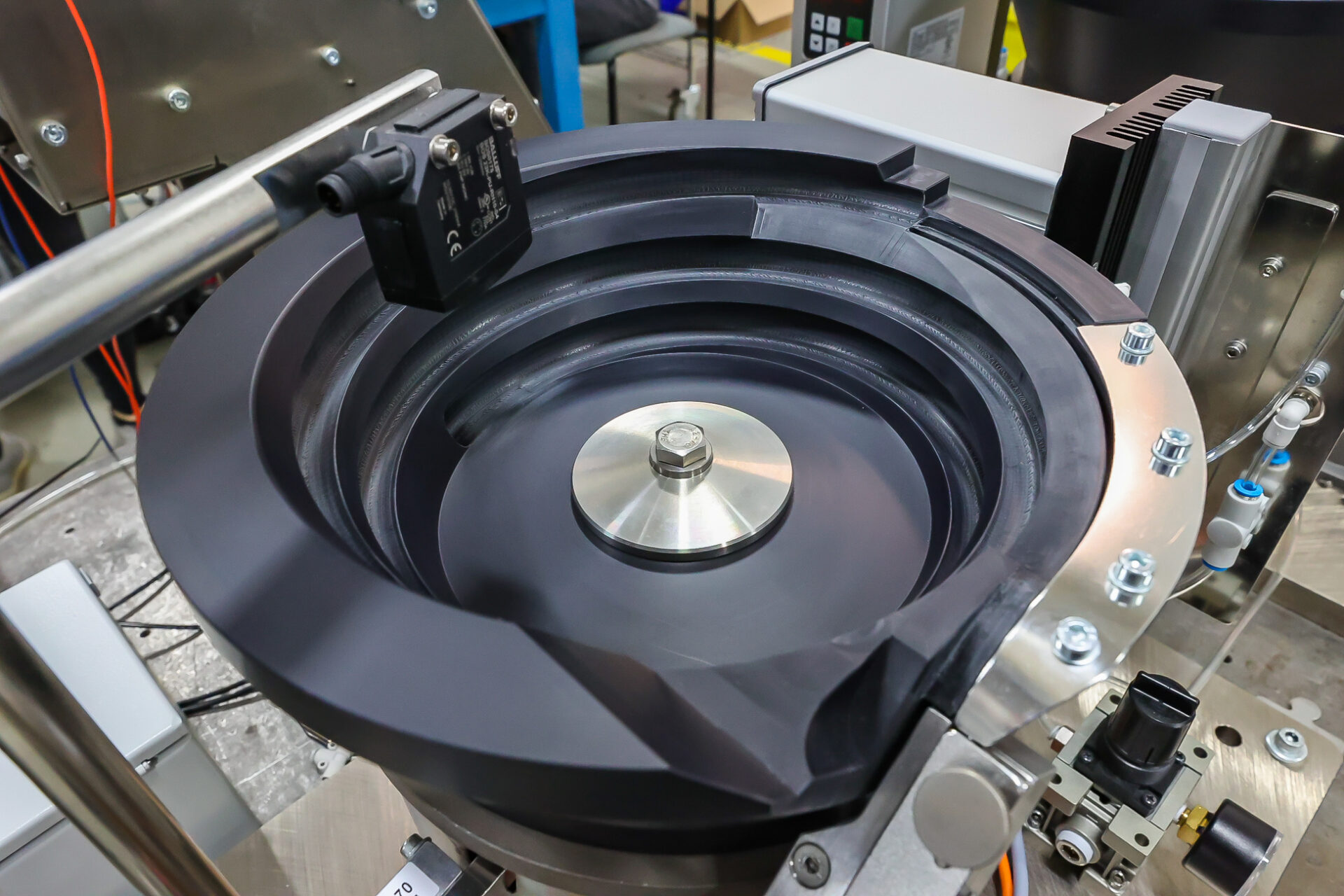
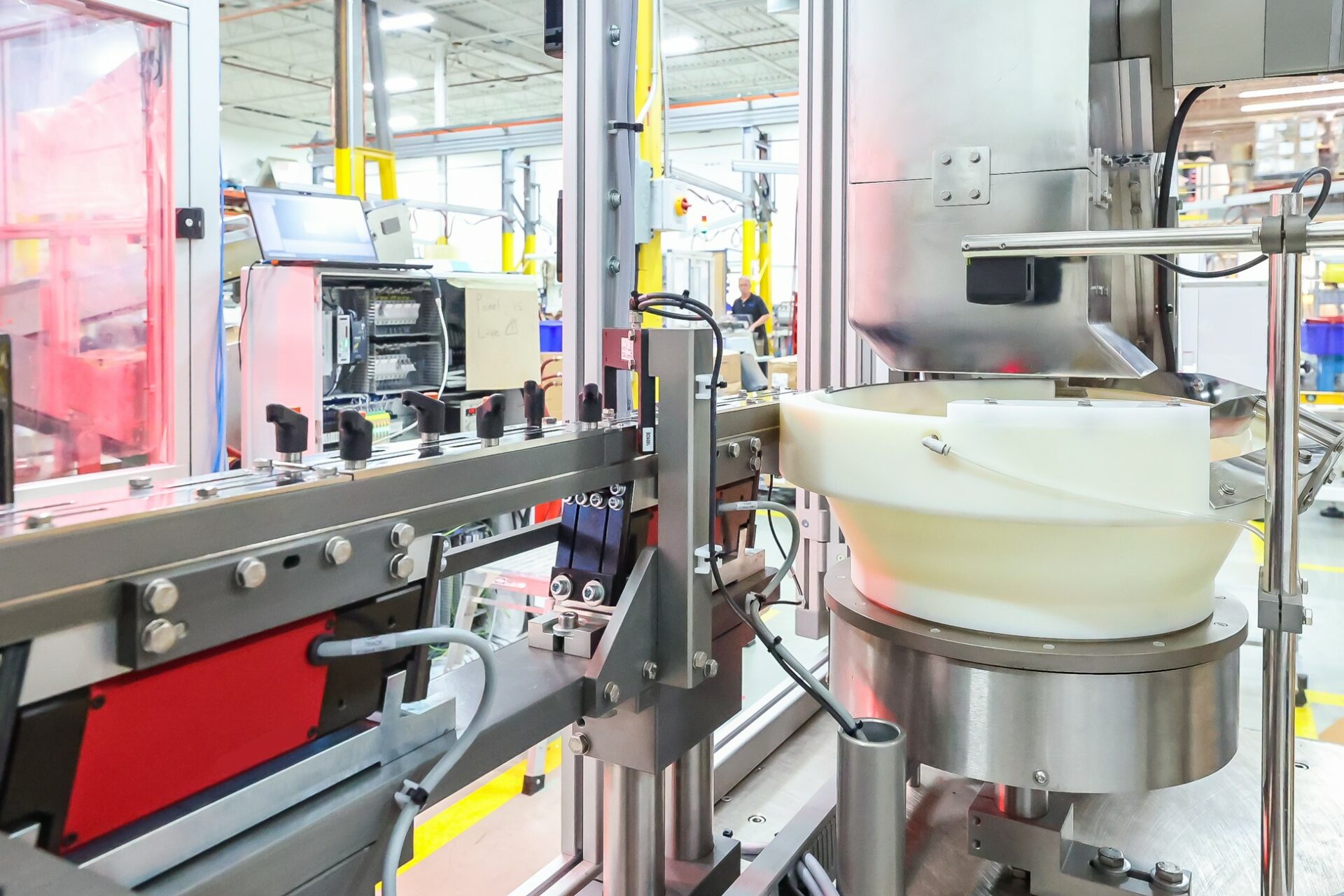
For many cleanroom applications, vibratory bowl feeders are still one of the most practical starting points. They are often used when parts need to be oriented reliably at production speed before moving into the next stage of the process. In cleanroom manufacturing environments, these systems can be built with features that better support sanitation and controlled handling, including polyamide bowls, stainless steel components, appropriate coatings, and washdown-ready enclosures when the application calls for them. That makes them a strong fit when the goal is dependable orientation without losing sight of cleanability and part care.
Linear Feeders for Stable Transfer and Spacing
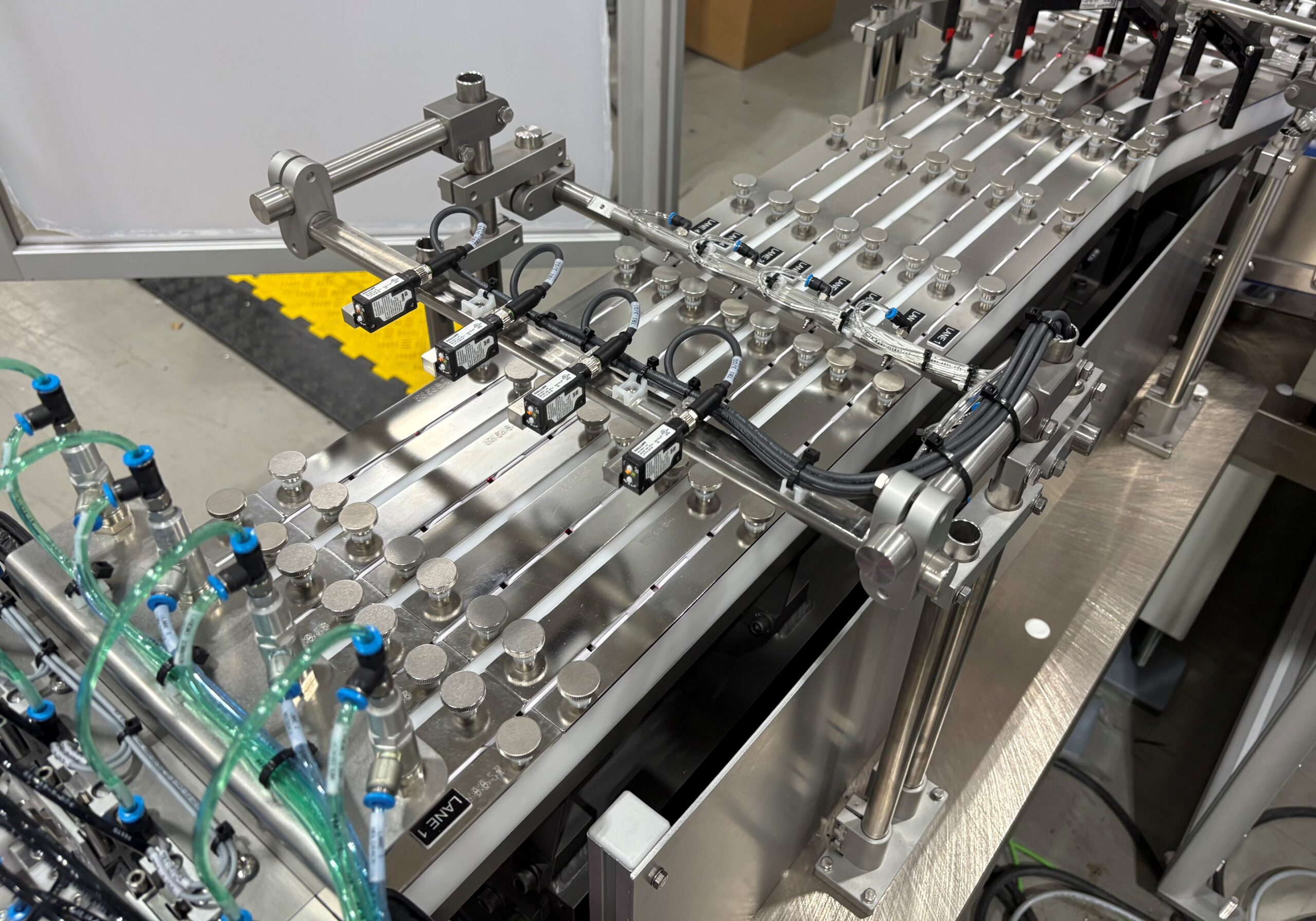
After parts are oriented, they need to be transferred to the next station in a controlled, consistent way. That is where linear feeders add value. They help maintain spacing, smooth out uneven supply, and deliver parts more predictably to downstream equipment. In cleanroom manufacturing, linear feeding systems can help reduce contamination risk by controlling part flow, limiting unnecessary contact, and minimizing disruptions that lead to operator intervention.
Centrifugal Feeders for Gentle High-Speed Handling
Some cleanroom applications require high speeds with a gentler handling style than a vibratory system may offer. In those cases, centrifugal feeders can be a strong option. They are often used when delicate parts need to be separated and oriented quickly while limiting unnecessary contact and reducing the chance of damage during feeding. Where throughput is high and part sensitivity is also a concern, that combination can make centrifugal feeding a better fit than a more traditional vibratory approach.
Flexible Robotic Feeding for Part Variety and Faster Changeovers
When manufacturers need to handle multiple part types or frequent changeovers, flexible robotic feeding can be an effective solution. These systems present parts on a flat surface, where vision and robotic picking work together to identify, locate, and pick different part types without requiring dedicated tooling for each one. Flexible robotic feeding systems can be adapted specifically for cleanroom manufacturing, with design features that support controlled environments and minimize interference with cleanroom airflow. That makes them worth considering when flexibility matters as much as throughput.
In Many Cases, the Best Answer Is a Combination
In practice, cleanroom feeding automation is often a system made up of more than one technology. A bowl feeder may handle bulk orientation, a linear feeder may stabilize flow and spacing, and robotics or vision may take over for final presentation. In other applications, the better fit may be centrifugal or flexible feeding from the start. The right choice comes down to how the parts behave, how gently they need to be handled, how much output is required, and how the feeder needs to support the cleanroom process as a whole.
Partner with VTR Feeder Solutions for Cleanroom Feeding Automation
Cleanroom manufacturing demands more from an automated feeding system. It needs to support part orientation, controlled transfer, cleanability, repeatability, and long-term reliability within highly regulated production environments. That is where experience matters.
At VTR Feeder Solutions, we support manufacturers across North America, Europe and globally with automated feeding systems built for your parts, your process, and your production goals.
Contact us to explore the right solution for your cleanroom application.