
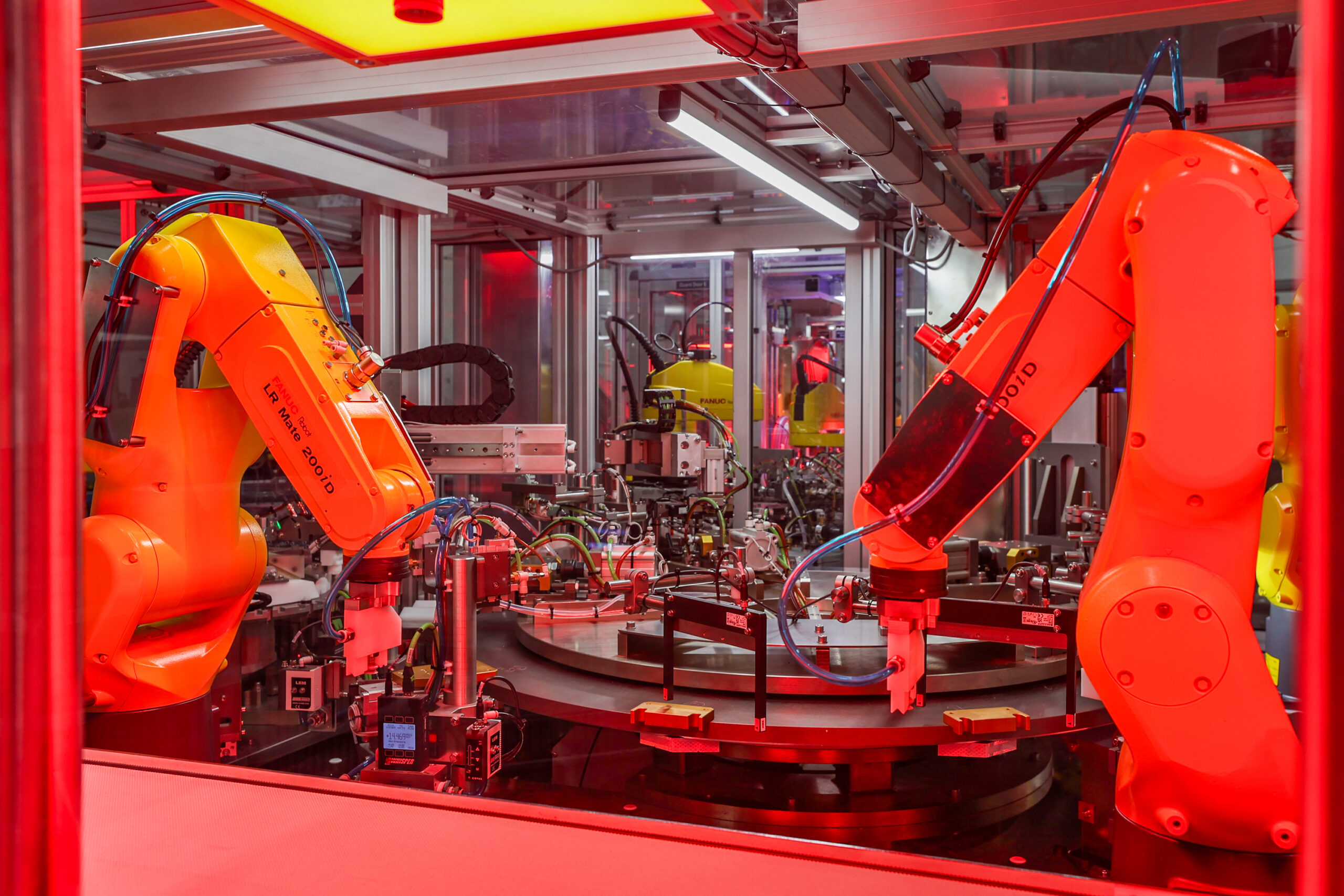
How flexible feeding systems help manufacturers reduce retooling costs and adapt faster to new launches, engineering changes, and high-mix production.
For manufacturers in consumer goods, electronics, and contract manufacturing, speed is always under pressure. In today’s production environment, adaptability is just as critical. Products change faster, variants multiply, engineering revisions happen midstream, and production runs keep getting shorter. Each shift puts more pressure on production.
Dedicated feeding systems can be highly effective when part geometry remains consistent and production volumes stay high over long periods. But when manufacturers are dealing with frequent changeovers, multiple SKUs, and evolving part designs, hard-tooled systems can become more difficult and more costly to adapt.
This is where flexible feeding systems become especially valuable.
At VTR Feeder Solutions, we help manufacturers build automation that can keep pace with real-world production. In short product lifecycle manufacturing, the goal is not simply to automate a single part or run. It is to create a feeding solution that remains practical, efficient, and cost-effective as products evolve. That means reducing retooling costs, simplifying changeovers, and designing adaptability into the system from day one.
Why Short Product Lifecycles Put Pressure on Automated Parts Feeding Systems
Short product lifecycles change the economics of automation. When a product may be revised, replaced, or expanded into new variants within a shorter window, manufacturers have less time to recover tooling costs and less tolerance for equipment that is difficult to modify.
That puts more pressure on automated parts feeding systems. A feeding solution can no longer be judged only by how well it runs one part under one set of stable conditions. It needs to support faster launches, smoother changeovers, and a more efficient response to ongoing product updates.
Common pressures include:
- tooling costs needing to be recovered over shorter production windows
- engineering changes interrupting validated processes and adding rework
- new product launches leaving less room for lengthy equipment adjustments
- production schedules shifting between lower volumes and mixed part families
- downtime during changeovers having a greater impact on output and profitability
In this kind of environment, feeding strategy becomes more than a technical decision. It directly affects responsiveness, cost control, and the long-term value of the automation investment.
Where Hard-Tooled Feeding Systems Can Become a Bottleneck
Hard-tooled feeding systems still play an important role in manufacturing. When part geometry is stable and production volumes remain high, they can deliver excellent speed, consistency, and repeatability.
The challenge is maintaining that same efficiency as products evolve.
A small design revision may require new tooling sections. A new variant may need a different orientation method. A line built around one SKU may need meaningful mechanical changes to support the next one. As those changes begin to add up, the feeding system can start slowing the operation down instead of supporting it.
That often leads to:
- additional tooling costs
- more engineering time
- longer changeover timelines
- greater spare parts complexity
- more risk during product transitions
In short lifecycle manufacturing, those costs can accumulate quickly. The issue is not that hard-tooled systems are ineffective. It is that they are typically built for stability, while many manufacturers now need feeding automation that can stay effective through change.
How Flexible Feeding Systems Help Manufacturers Adapt
A flexible feeding system is designed to handle change more effectively. Instead of relying on fixed tooling built around one part and one setup, it gives manufacturers a more adaptable way to manage part variation, product updates, and changing production needs.
That can make a real difference in environments where products evolve quickly or multiple SKUs need to run on the same line. Rather than requiring major mechanical changes every time something shifts, flexible feeding systems give manufacturers a more practical way to adjust without disrupting the entire line.
Depending on the application, a flexible feeding solution may help manufacturers:
- move between parts and product variants more quickly
- reduce retooling when designs change
- support multiple SKUs on the same line more easily
- minimize downtime during product transitions
- get more long-term value from the automated feeding investment
For high-mix, lower-volume manufacturing, that flexibility can be a major advantage. More adaptability is built into the system’s software, controls, robotics, and vision capabilities, which can reduce the amount of mechanical rework needed as production requirements shift.
How Flexible Feeding Systems Reduce Retooling Costs
One of the clearest advantages of flexible feeding systems is the ability to reduce the cost of change.
Retooling is rarely limited to one replacement component. It often includes engineering review, machining, installation, testing, validation, spare parts, and lost production time during transition. When that cycle repeats across multiple revisions or product variants, the true cost becomes much larger than the tooling itself.
A flexible automated feeding system helps reduce that burden by limiting how much dedicated hardware must be changed from one version to the next. In many cases, a new part or revision can be supported through software updates, vision adjustments, robotic programming changes, or targeted tooling modifications rather than a full mechanical redesign.
That does not mean every application can be handled without tooling changes. It means the system is structured so changes are easier to manage, less disruptive to production, and more cost-effective over time.
For manufacturers with frequent launches or recurring design updates, that can make the cost of automation much easier to justify across the full life of the line.
Automated Feeding Systems That Support Faster Product Launches
New product launches move fast and often come with moving targets. Production needs to be ready quickly, even when part details and requirements are still being finalized.
Flexible feeding can offer a real advantage here. Products that are likely to evolve after launch are often better suited to a feeding approach that can adapt more easily. When design revisions, customer-driven variations, or new product versions are introduced, the feeding system can usually be adjusted with less rework.
That flexibility becomes even more valuable in the electronics and consumer goods industries. Product refresh cycles can move quickly, and components such as housings, fasteners, molded parts, and packaged items often change as designs evolve. A flexible feeding system helps manufacturers support those updates without turning every revision into a larger tooling project.
A more adaptable feeding system helps production teams respond faster and reduces the risk of the feeding system becoming a bottleneck during new product launches.
A Competitive Advantage for High-Mix Manufacturing
Not every production environment is built around long runs of one part. Many manufacturers are balancing multiple part numbers, shorter batches, and frequent job changes. In contract manufacturing especially, that flexibility can be a competitive advantage.
In these environments, success is not only about running one SKU at maximum speed. It is about staying efficient across a wider mix of jobs without adding unnecessary complexity.
This is where flexible feeding systems and robotic vision-guided technology can be especially effective. By using adaptable presentation methods, vision inspection, and programmable robotic handling, manufacturers can support a broader part range within one automated parts feeding system.
That can help manufacturers:
- reduce time lost during changeovers between runs
- reduce reliance on dedicated tooling for every part variation
- respond more efficiently to changing customer requirements
- support mixed production without adding unnecessary complexity
- plan capacity more effectively and quote new work with greater confidence
For high-mix production, flexibility is not just a convenience. It can directly support better production line utilization and a more resilient automation strategy.
When Manufacturers Should Consider Flexible Feeding Systems
Flexible feeding is not the right answer for every application. In some cases, a dedicated vibratory bowl feeder or linear feeding system may still be the best fit, especially where volumes are very high, part geometry is highly stable, and output requirements are centered on one product for a long period of time.
Flexible feeding becomes especially compelling when the application includes frequent engineering changes, multiple product variants, short product lifecycles, uncertain future SKU mix, lower to medium volumes across a broader part range, faster launch requirements, or a need to control ongoing tooling spend.
In many cases, the best answer may be a hybrid solution. A system can combine dedicated feeding, robotics, and vision-guided part handling where each makes the most sense. That is why automated feeding system design should be evaluated in the context of the full manufacturing plan, not only the current part design.
How VTR Builds Parts Feeding Systems That Support Manufacturing Resilience
At VTR Feeder Solutions, flexibility is engineered with purpose. The goal is not to add complexity or features the application does not need. It is to build the right level of adaptability into the system so it continues to perform as production requirements change.
That starts with understanding the application in full. How often is the product likely to change? Will multiple variants need to run on the same line? How much changeover time is acceptable? Does the application call for a dedicated system, a flexible feeding system, or a hybrid approach? These are the questions that shape the right solution.
From there, the system is designed around real production needs. In some applications, that may lead to a robotic vision-guided feeding system. In others, it may involve a different combination of feeding, controls, and handling technologies to reduce changeover effort, manage product variation more efficiently, and protect the long-term value of the automation investment.
As product lifecycles continue to shorten, that kind of flexibility becomes more important. Manufacturers need parts feeding automation that can respond to engineering changes, support new product launches, reduce retooling costs, and keep production moving without unnecessary disruption.
For manufacturers in consumer goods, electronics, and contract manufacturing, that adaptability can directly affect cost control, uptime, and long-term competitiveness. The goal is not simply to automate part feeding. It is to build a feeding solution that continues to deliver value as production requirements change.
Contact VTR Feeder Solutions to explore a feeding solution built for performance, adaptability, and long-term value.


