Syringe components and injection device parts are manufactured to exceptionally tight tolerances. Even minor inconsistencies in handling can compromise assembly accuracy, sterility, or long-term device performance.
Parts such as syringe barrels, plungers, needle hubs, safety shields, caps, and elastomeric seals must be handled carefully, oriented correctly, and delivered consistently to the assembly process. All of this often happens at high speeds, inside cleanroom environments, under strict regulatory oversight.
In pharmaceutical and medical device manufacturing, automated syringe feeding systems play a critical role in transforming bulk components into controlled, validated inputs for downstream assembly. When feeding is unstable, the entire production line suffers. When feeding is engineered correctly, it becomes a predictable, scalable foundation for quality, throughput, and regulatory compliance.
Automated feeding for syringe and injection device components is not just about moving parts. It is about controlling part behavior, minimizing contamination risk, and delivering consistent orientation in demanding medical assembly environments.
Why Syringe and Injection Device Components Require Specialized Feeding Automation
Syringe and injection device component feeding presents challenges that are fundamentally different from traditional industrial parts feeding. Many medical components are lightweight, thin-walled, or made from polymers and elastomers that behave unpredictably in bulk. Others feature sealing surfaces, cosmetic finishes, or transparent geometries that are sensitive to abrasion and handling marks.
In bulk, these parts can:
- Stick together due to static
- Nest or stack
- Rotate unpredictably
- Deform under pressure
- Become cosmetically damaged through friction
In manual environments, an operator can notice and correct these issues in real time. In automated environments, the system must manage this behavior on its own.
Feeding systems that are not purpose-built for medical components often lead to frequent stoppages, excessive recirculation, inconsistent presentation, increased inspection burdens, and higher scrap rates. This is why syringe components and injection device parts require automated feeding systems designed around their specific behavior, material properties, and cleanroom constraints, rather than relying on generic feeding solutions.
Contamination Control in Automated Feeding Systems
In pharmaceutical and medical device manufacturing, contamination control begins well before final assembly or packaging. Feeding systems are often the first mechanical interface between bulk components and the cleanroom assembly process.
In this environment, contamination does not only mean visible debris. It can include microscopic particles generated from friction, material shedding from tooling surfaces, cosmetic damage to sensitive parts, or any foreign matter that could affect sterility, sealing integrity, or overall device performance.
Every surface that contacts a component becomes part of the contamination risk profile. If parts rub excessively against one another, slide across abrasive materials, or experience uncontrolled vibration, tiny particles can be created. Over time, even normal wear on feeder components can introduce unwanted debris into the process.
Medical cleanroom feeder systems are designed to reduce these risks from the start. Tooling materials are selected for low wear and chemical compatibility with cleaning agents. Surfaces are smooth and controlled. Motion is tuned to guide parts gently, minimizing unnecessary impact or recirculation.
By managing contamination at the feeding stage, manufacturers protect product quality early in the process. This reduces downstream inspection challenges, improves overall line stability, and supports regulatory compliance throughout pharmaceutical and medical device production.
The Importance of Orientation and Presentation in Medical Assembly
Precision orientation is critical when feeding syringe components and injection device parts. Many assemblies depend on accurate alignment between components that must fit or seal together, such as plungers inside barrels or needle hubs within housings. Parts must arrive in a consistent, repeatable position for robotic pick-and-place systems, as even minor orientation errors can lead to assembly faults, leaks, or compromised device performance.
Automated feeding systems are designed to guide parts through separation, orientation, and presentation stages. Each stage is engineered around the geometry and behavior of the component.
Separation begins at the hopper, where bulk parts are introduced in a controlled manner. Feed rates are carefully regulated to prevent overcrowding, part damage, or uncontrolled interactions. For delicate components, gentle motion and controlled flow are essential to maintaining part integrity.
Orientation follows separation. Tracks, tooling features, and mechanical sorting elements are designed to encourage correct alignment while rejecting incorrect orientations. In higher-complexity applications, sensors or vision systems verify orientation before parts are allowed to advance.
Finally, parts are presented to the assembly process with precise timing, alignment, and repeatability. Whether feeding into a robotic pick-and-place operation or a continuous assembly process, consistent presentation ensures downstream equipment can operate at speed without interruption.
When separation, orientation and presentation are engineered correctly, the entire assembly process becomes more predictable.
Feeding Systems for Syringe and Injection Device Components
There is no single feeding solution that fits every syringe or injection device application. The right approach depends on part geometry, material behavior, production volume, cleanliness requirements, and how the assembly process is configured.
The most effective systems are selected based on how the part behaves and what the line demands.
Vibratory Bowl Feeders
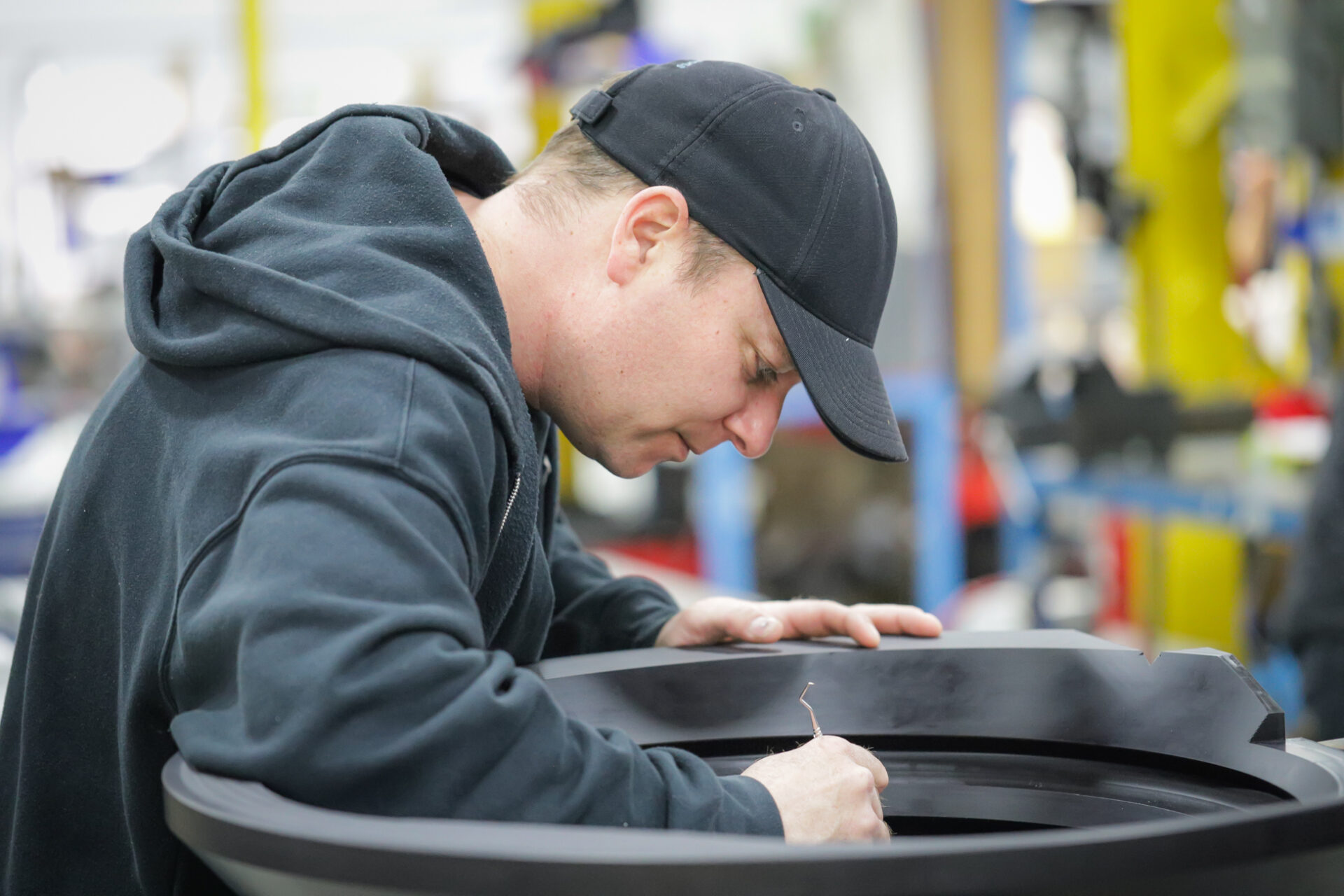
For high-volume, dedicated production lines, vibratory bowl feeders are often the most effective solution when the component geometry supports mechanical orientation.
A properly engineered vibratory bowl feeder separates and orients parts using controlled vibration and purpose-built tooling. In medical applications, vibration levels are carefully tuned to protect sensitive components. Tooling surfaces are polished and shaped to guide parts gently while maintaining consistent flow and minimizing contact.
When designed specifically for syringe and injection device components, vibratory systems provide stable orientation, high-speed performance, and long-term reliability in cleanroom environments.
Linear Feeders
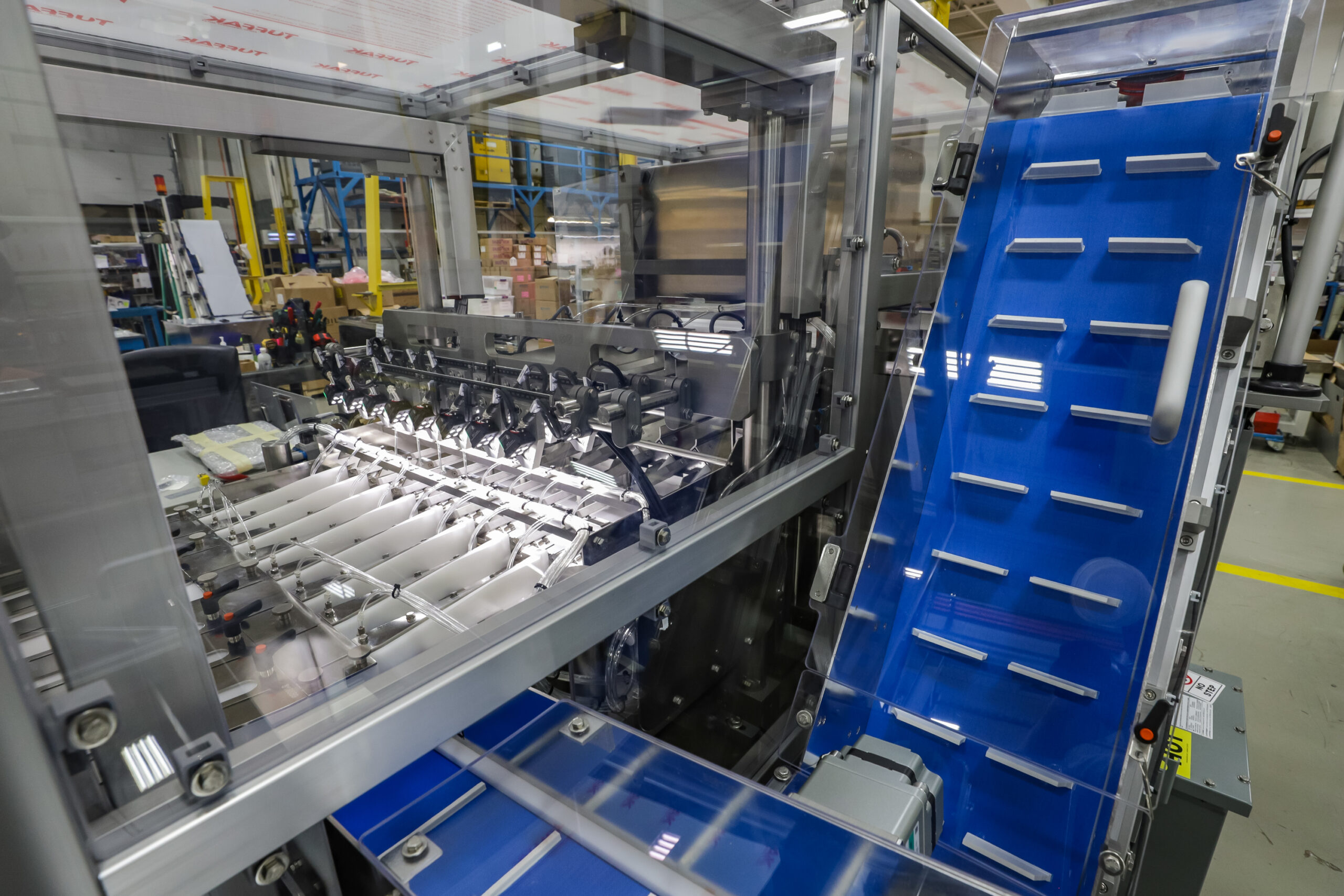
Linear feeders are typically positioned after the vibratory bowl feeder to carry parts toward the assembly station in a controlled, orderly manner. Their job is to maintain proper spacing and consistent flow so each component arrives ready for the next step.
Rather than feeding parts directly into the assembly equipment, linear feeders create a small buffer between the feeding system and the assembly process. This buffer helps absorb minor fluctuations in part flow and keeps the assembly station running smoothly, even if there is a brief variation upstream.
By stabilizing part delivery, linear feeders improve overall cycle-time consistency and reduce the likelihood that small interruptions will affect the entire production line.
Multilane Linear Feeders
In high-speed assembly environments, multilane linear feeders allow multiple streams of parts to be staged simultaneously. This supports parallel assembly operations and increased throughput without sacrificing orientation control.
Multilane configurations are particularly valuable when production volumes are high and consistent delivery to multiple stations is required.
Flexible Feeding Systems
Instead of mechanically forcing parts into the correct orientation inside a bowl, flexible feeding systems spread parts out on a surface and use vision-guided robotics to identify each part’s position and orientation in real time. A robot then picks the part and places it directly into the assembly process with the proper orientation.
This approach reduces the need for highly customized mechanical tooling and makes it easier to handle multiple part variations on the same line. Flexible feeding systems are particularly useful for asymmetric components, cosmetic parts that require careful handling, or production environments where faster changeovers are important.
Cleanroom Compatibility and Integration
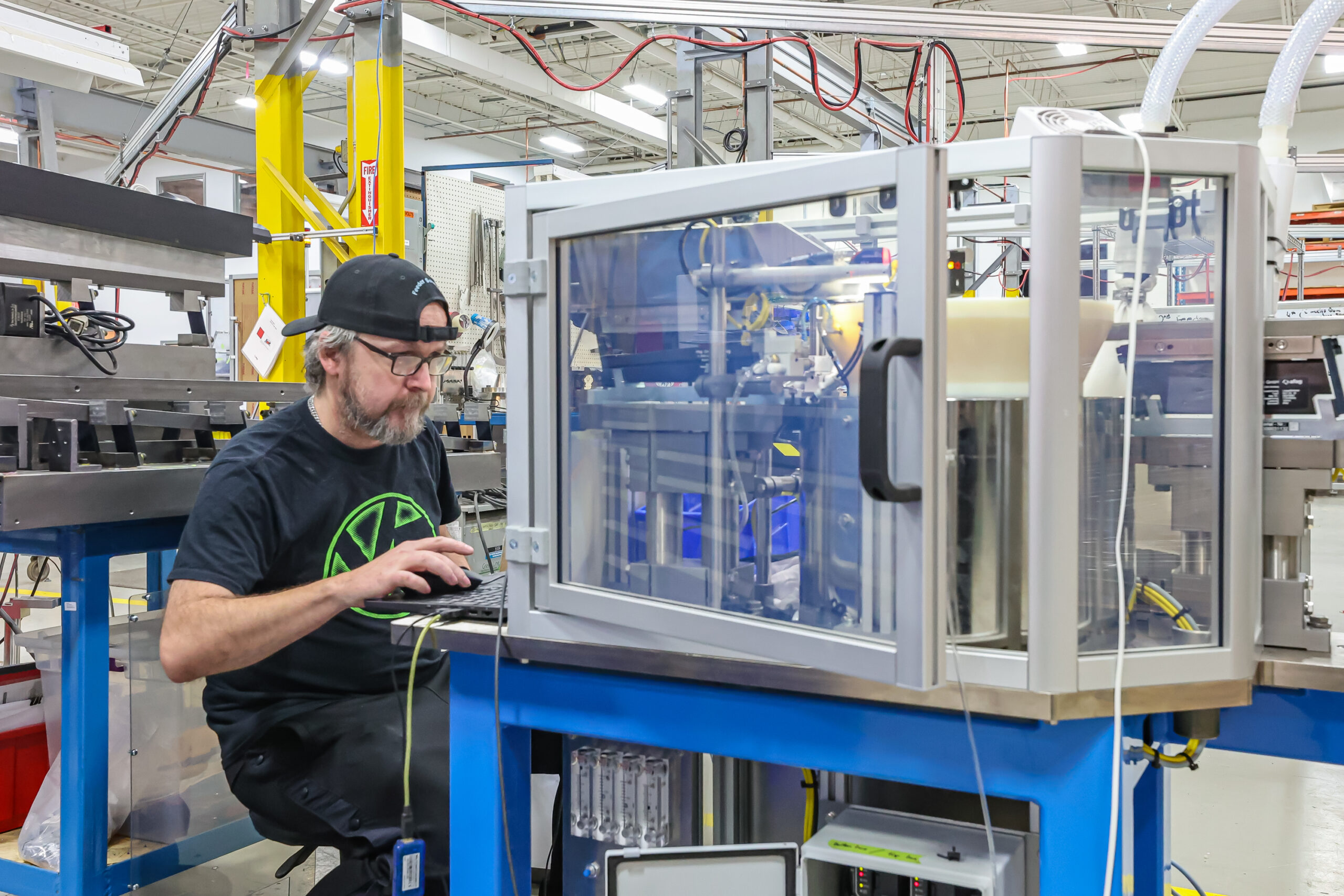
In pharmaceutical and medical device manufacturing, a feeding system cannot operate as a standalone machine. It must function as part of a validated cleanroom production line.
Cleanroom compatibility starts with materials and design. Surfaces that contact syringe and injection device components must be smooth, low-wear, and compatible with approved cleaning agents. The system should minimize unnecessary friction and wear between moving components, as these interactions can generate microscopic particles within the cleanroom environment.
Equally important is cleanability. Tooling, tracks, and contact components should be modular and accessible so they can be removed, cleaned, and reinstalled without disrupting surrounding equipment. Maintenance access must be straightforward, supporting routine cleaning and validation procedures without extended downtime.
Beyond cleanliness, the feeder must integrate with the rest of the manufacturing process. It must deliver parts at the correct rate to prevent overfeeding or starvation. It must communicate with line controls and stay synchronized with upstream molding, inspection, and downstream assembly operations.
When a feeding system is designed with both cleanroom requirements and line integration in mind, it becomes a stable part of the manufacturing process rather than a source of disruption.
Designing Feeding Systems Around Part Behavior
Effective feeding system design starts with understanding how syringe components and injection device parts behave in motion. Lightweight plastics, elastomers, and precision-molded components respond differently to vibration, gravity, and contact than traditional metal parts.
Parts may attract static, stick together, or rotate unpredictably. Sealing features and thin walls can deform if subjected to excessive force. These behaviors must be understood and accounted for during system design.
Engineering teams evaluate parts under real feeding conditions, observing how they move, interact, and respond to controlled motion. Tooling geometry and motion profiles are adjusted based on real feeding conditions, not assumptions.
By designing vibratory bowl feeders, linear feeders, and flex feeding systems around the natural tendencies of syringe and injection device components, manufacturers achieve reliable orientation, gentle handling, and consistent long-term performance.
Reliable Feeding is the Foundation for Successful Medical Manufacturing
Although feeding systems sit at the front of the line, their influence extends throughout the entire assembly process.
Stable feeding reduces downtime, improves consistency, and supports predictable cycle times. When parts arrive correctly oriented and on schedule, downstream equipment operates at full capacity with fewer interruptions. Controlled handling also lowers the risk of cosmetic defects, deformation, and contamination, while improving overall assembly accuracy.
In regulated pharmaceutical and medical device environments, consistent feeding makes validation easier and helps maintain compliance. When feeding is unstable, small disruptions at the start of the line can quickly turn into larger quality and performance issues downstream.
If you are facing challenges feeding syringe components or injection device parts, the solution starts with understanding the part, then engineering the feeding system around it.
Contact our team to discuss an automated feeding solution designed for your components and your production requirements.