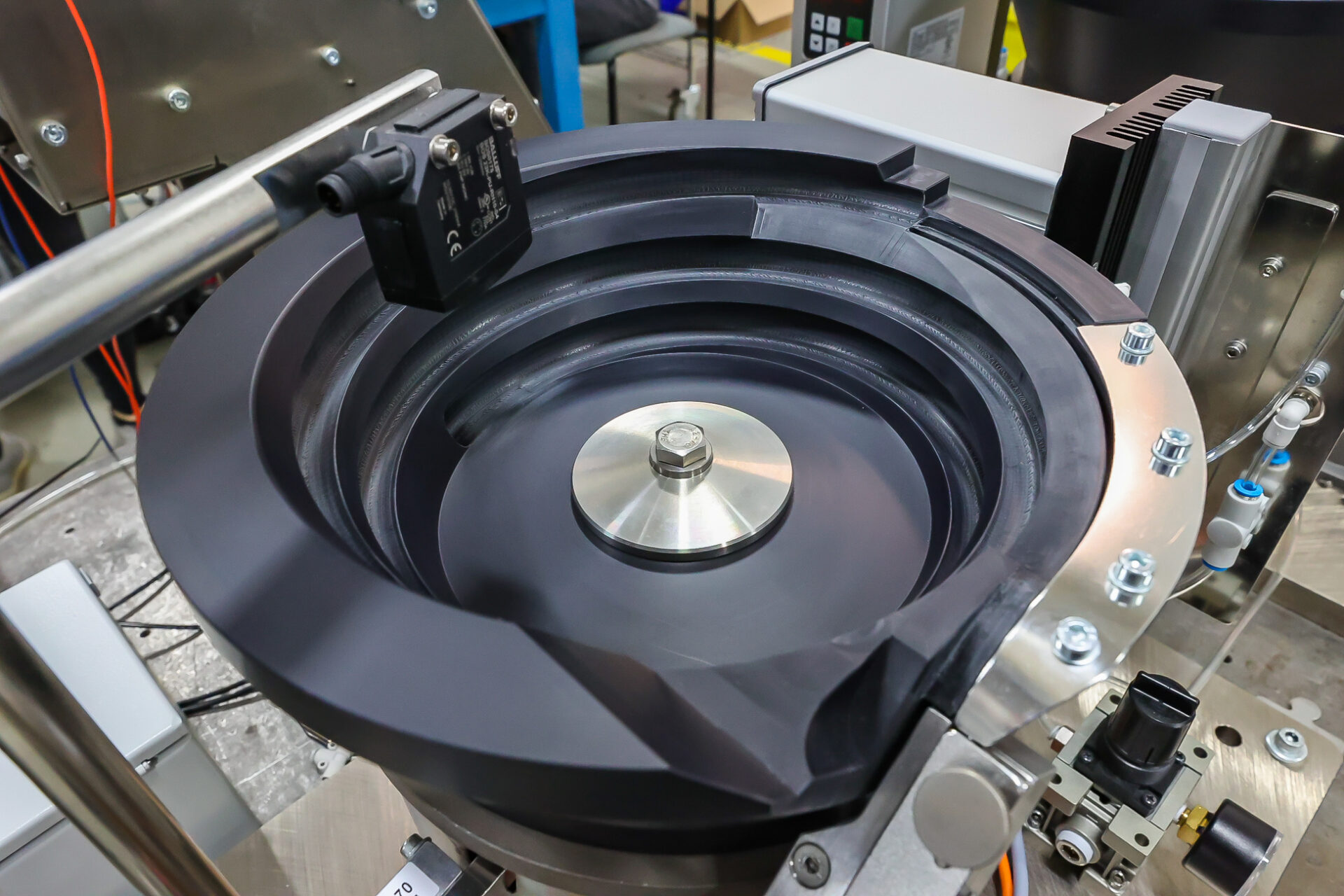
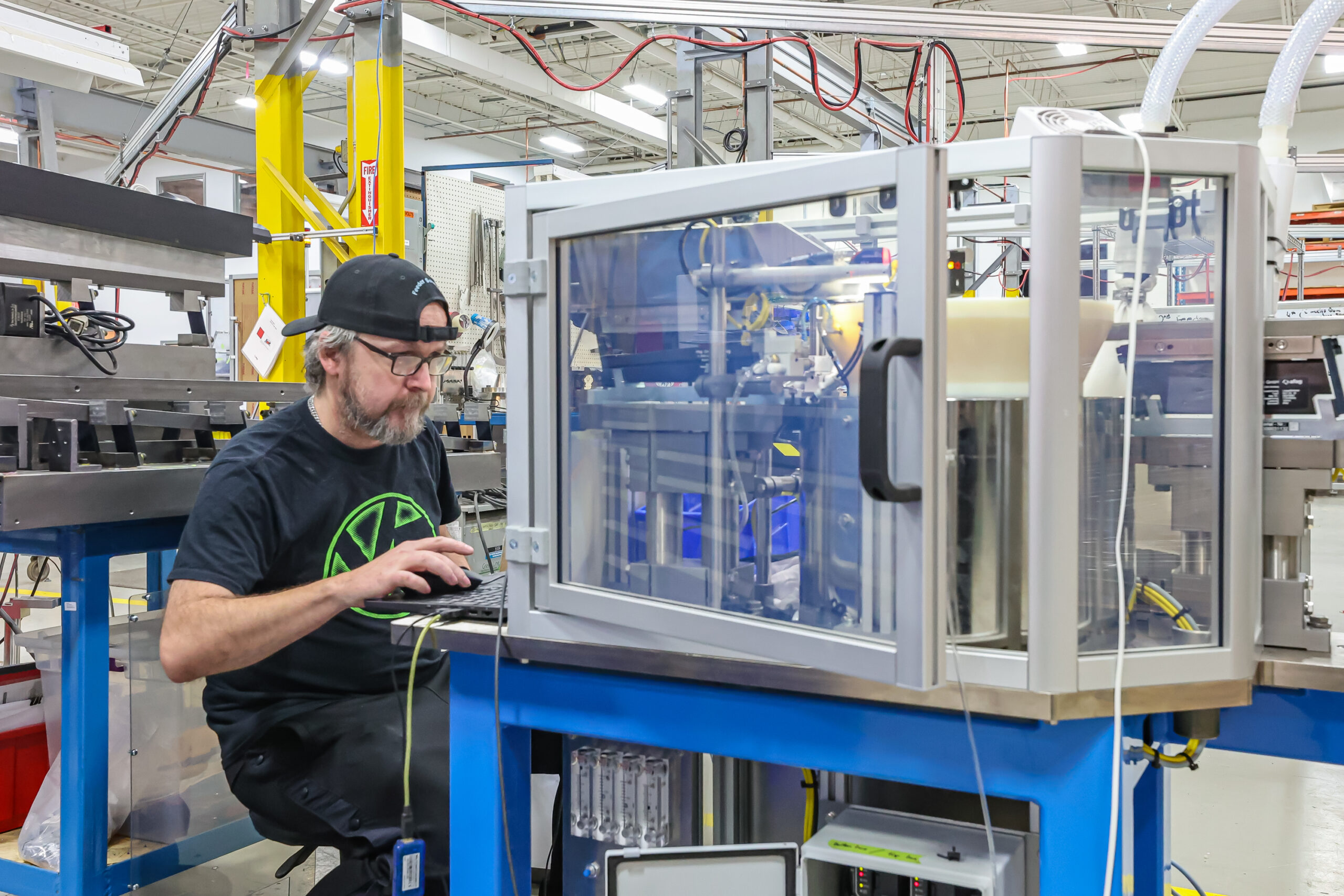
How VTR designs high-precision systems for tubing, silicone components, catheters, seals, and other flexible medical components.
Medical device manufacturing demands a level of precision, consistency, and sanitization unmatched by most other industries. As products become smaller, softer, and more complex, automated parts feeding systems play an increasingly critical role in ensuring components are handled gently, reliably, and without compromise.
From silicone tubing and soft-molded seals to catheters, caps, and diaphragms, the medical industry relies heavily on components that are fragile, pliable, and often difficult to feed with traditional methods. At VTR, we see this challenge as an opportunity to innovate—to develop systems that protect part integrity while delivering the speed, accuracy, and repeatability modern medical production requires.
Soft, flexible, and fragile components require more than a standard feeding solution. They require a partner who understands the intricacies of medical manufacturing and designs systems with both performance and human impact in mind.
At VTR, that balance is at the heart of what we do.
Why Soft and Flexible Medical Components Are Challenging to Feed
Soft, elastic, fragile, or thin-wall medical components behave differently from rigid parts. Their material properties introduce unique feeding challenges:
- Parts deform under pressure, causing inconsistent orientation
- Thin walls collapse easily, requiring gentle handling
- Non-rigid materials absorb vibration, reducing bowl feeder efficiency
- Flexible tubing can tangle, bunch, or knot
- Sticky silicone or rubber components may cling to surfaces
- Fragile diaphragms and membranes can tear or puncture with improper tooling
Medical manufacturers cannot risk deformation, contamination, or damage. In a sector where patient safety depends on device performance, every part must be delivered to the machine in perfect condition and correctly oriented—every time.
This is where a specialized, medically-focused automated parts feeding system becomes essential.
Common Soft & Flexible Medical Components That Require Specialized Feeding
VTR designs feeding systems for a wide range of medical components, including:
- Silicone Tubing & PVC Tubing
- Catheters & Micro-Catheter Components
- Soft Molded Seals & Gaskets
- Caps, Plugs, and Stoppers
- Diaphragms & Thin Membranes
- Flexible Connectors, Valves & Sleeves
- Elastomer-Based Components
- Rubberized or Silicone Over-Molded Parts
- Small Flexible Assemblies or Sub-Components
These parts often need to be fed at high speeds into automated assembly equipment—without overstretching, tearing, collapsing, or contaminating them. In addition, Robots can be used for manipulation of complex parts at assembly stations, which can help mitigate employee fatigue.
That’s why VTR designs every system with precision-engineered processes, custom tooling, and control strategies that respect the delicate nature of these components.
How VTR Designs Feeding Systems for Soft, Flexible, and Fragile Medical Parts
Soft and flexible medical components demand a different approach to automation. Their shape, material properties, and sensitivity require feeding systems designed with precision, care, and control. At VTR, we engineer solutions that respect the behavior of each part while maintaining the speed and reliability modern medical manufacturing depends on.
1. Gentle, Controlled Handling
Soft components can stretch, compress, or lose their shape under force.
We design feeding methods that guide parts smoothly, using controlled motion and surfaces that minimize stress. This reduces the risk of marks, deformation, or damage—especially for silicone, tubing, and thin-walled parts.
2. Movement That Maintains Part Stability
Flexible parts behave differently depending on speed, friction, and contact points.
Our systems manage each of these elements carefully so parts stay stable and aligned as they move through the process. This helps prevent tangling, collapsing, or bunching, which are common failure points with soft components.
3. Custom Tooling for Soft Materials
Instead of forcing a generic solution, we design tooling that complements the way each part naturally behaves. This includes thoughtful geometry, surface finishes, and transitions that help the part move predictably and consistently.
4. Cleanroom-Compatible Designs
Many medical components require clean and controlled environments.
Our systems use materials and structures that are easy to clean, durable, and appropriate for cleanroom conditions, supporting the standards medical manufacturers depend on.
5. Vision & Robotics for Added Accuracy
Some parts need extra help to stay oriented or properly positioned.
By integrating vision and robotic technologies when needed, we help ensure components reach the right place at the right time, especially when shapes vary or parts are especially delicate.
6. Validation That Supports Medical Manufacturing Needs
Medical production demands proof of reliability.
We support customers with structured testing and validation, offering confidence that the system meets the performance, consistency, and quality requirements of medical production.
Where Medical Manufacturers See the Most Value
Our customers in medical device production choose VTR because of the measurable benefits our systems deliver:
- Reduced Part Damage: Custom, low-pressure handling minimizes deformation, tears, punctures, and surface imperfections.
- Improved Throughput & Consistency: Even the softest components can be fed at high speeds—sometimes hundreds of parts per minute—while maintaining orientation quality.
- Cleaner, More Reliable Operations: Cleanroom-ready equipment reduces contamination risk and ensures regulatory compliance.
- Decreased Downtime: Systems optimized for soft materials are less prone to jams, tangles, or misfeeds.
- Better Quality Control: Vision integration enables real-time inspection and rejection of malformed or out-of-spec parts.
- A Trusted Engineering Partner: We don’t just build equipment. We collaborate. Our team works closely with yours to understand material properties, device requirements, and downstream processes so we can design with purpose.
Applications Across the Medical Industry
Our feeding systems support a wide range of medical parts, including but not limited to:
- Medical device manufacturing
- Surgical equipment components
- Catheter and tubing production
- Diagnostic consumables
- Wearable medical technologies
- Pharmaceutical packaging components
- IV set and fluid-management systems
- Respiratory device components
- Blood collection apparatus
Whether the part is soft, flexible, delicate, or simply too complex for traditional feeding equipment, we design solutions that keep your production moving with confidence.
Why Medical Manufacturers Trust VTR
Feeding soft and delicate components takes more than technical capability—it requires care, intention, and a deep understanding of how these parts support the people who rely on them. At VTR, we bring that mindset into every solution we design.
We deliver value through:
- Thoughtful engineering and proven reliability
- A deep understanding of soft-part behaviour
- A collaborative approach that aligns equipment with real production needs
- Innovative solutions shaped by medical industry expectations
At VTR, we create systems that protect part integrity, support operational excellence, and strengthen the quality of the medical products our customers bring to market. If you want a system that is gentle, accurate, cleanroom ready, and built for the future of medical manufacturing, we would be proud to collaborate with you.
Contact VTR Feeders Solutions to discuss your part, your process, and your production goals.
Together, we can design a feeding solution that protects every component and empowers your team to deliver medical devices with confidence.